


The commercial opportunity from fleet electrification explained
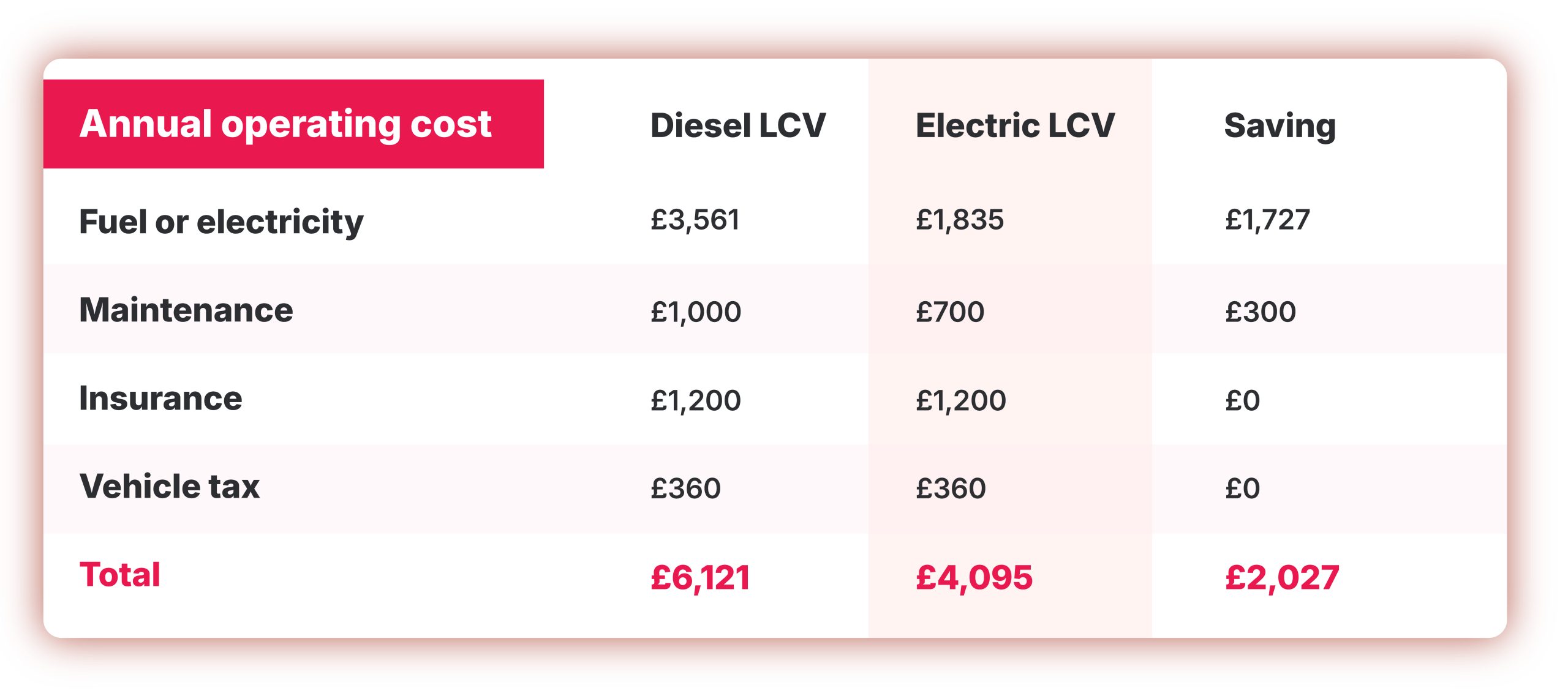
Our illustrative TCO model indicates that switching a medium light commercial vehicle from diesel to electric could reduce annual operating costs by approximately £2,027 per vehicle.
For a vehicle travelling 20,000 miles annually, the model estimates that fuel costs could fall from approximately £3,561 for diesel to £1,835 for electricity, producing an annual energy saving of around £1,727. A further £300 maintenance saving is included, based on a conservative 30% reduction against a £1,000 annual diesel maintenance budget.
Key modelling assumptions
- Annual mileage: 20,000 miles
- Diesel efficiency: 35 mpg
- Diesel price: 137.1p per litre excluding VAT
- Electric efficiency: 0.38 kWh per mile
- Commercial electricity price: 24.14p per kWh
- Electric maintenance saving: 30%
- Insurance saving: none assumed
- Vehicle Excise Duty saving: none assumed
The electricity assumption is based on the UK government’s average non-domestic electricity price for the first quarter of 2026, including the Climate Change Levy. The diesel assumption is based on the DESNZ weekly road-fuel series for the week commencing 13 July 2026, adjusted to exclude recoverable VAT.
Electric vehicles typically require less routine maintenance because they have fewer moving parts and fluids, while regenerative braking reduces brake wear. The 30% saving used here is a modelling assumption and should ultimately be replaced with actual fleet servicing and repair data.
Scaling the opportunity
At the end of 2024, the UK had approximately 4.79 million licensed light goods vehicles, of which only around 86,000 were zero-emission.
Applying the illustrative £2,027 annual saving across the remaining 4.704 million vehicles produces a theoretical upper-market opportunity of approximately:
- £9.5 billion in operating savings each year
- £47.7 billion over five years
This is not a forecast that every UK van can or will be electrified. Vehicle suitability, mileage, payload, charging availability and replacement cycles will all affect the addressable opportunity. Nevertheless, it demonstrates the scale of the commercial prize: even capturing a fraction of the potential market could unlock billions of pounds in operating-cost savings.
These figures exclude differences in vehicle purchase price, leasing, depreciation, residual value and charging infrastructure. They also assume no insurance or vehicle-tax benefit. Zero-emission light commercial vehicles are now included within the standard £360 light-goods vehicle tax class.